
Home / Fish bone vs fish skin
Fish bone vs fish skin collagen
Quick answer
Fish skin collagen, the standard marine collagen, is made from skin and scales and is almost all Type I. Fish bone collagen comes from the skeleton, which also contains Type II from cartilage and is rich in minerals such as calcium and phosphorus. Bone is harder to process, which is why few producers use it.
Updated
Side by side
Fish skin and scales
Type I
The standard marine collagen.
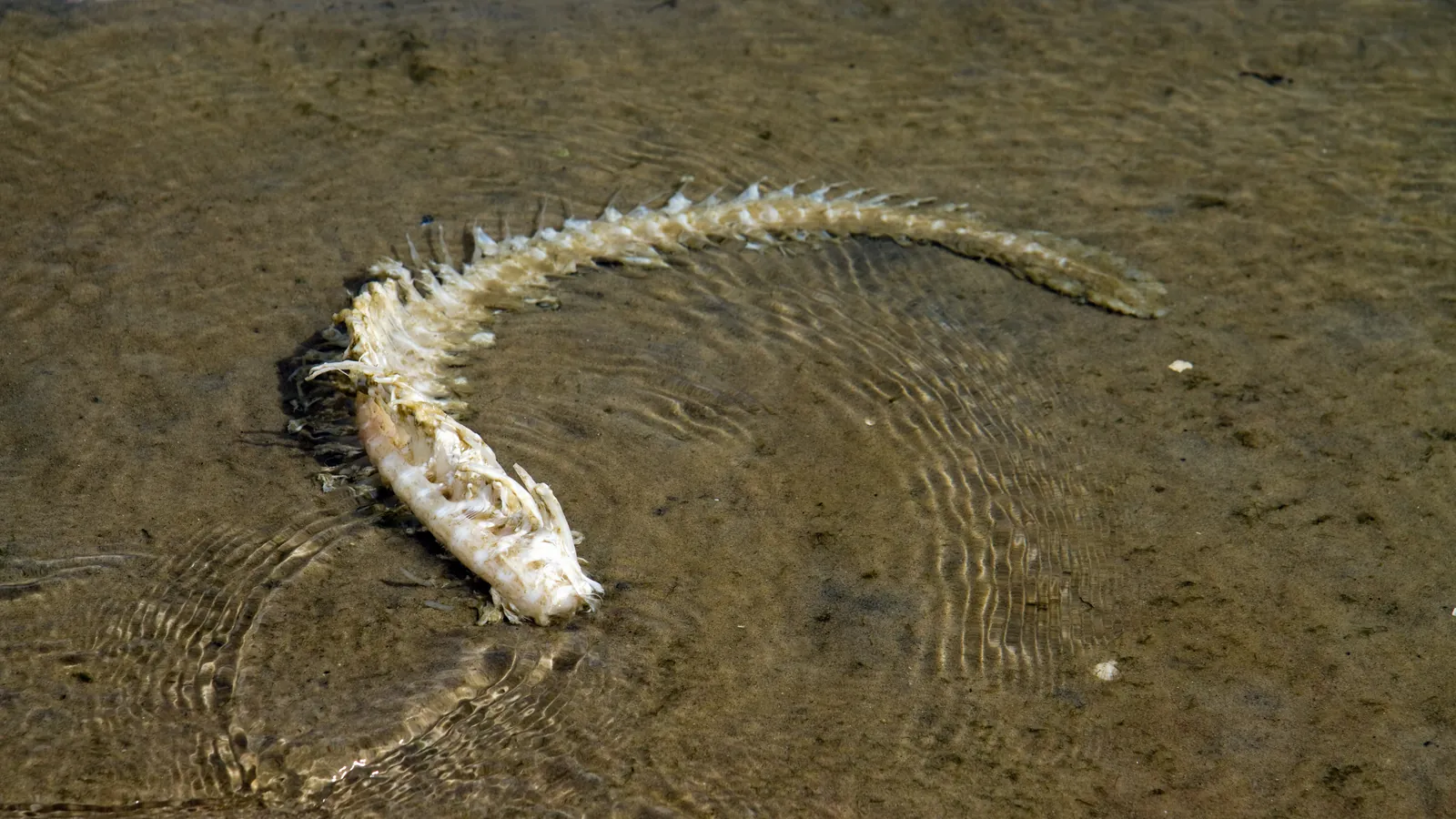
Fish skeleton: backbone, frames, cartilage
Type I + II
plus calcium and phosphorus
Our collagen.
| Fish skin collagen | Fish bone collagen | |
|---|---|---|
| Raw material | Skin and scales | Backbones, frames and cartilage |
| Main collagen types | Type I | Type I, plus Type II from cartilage |
| Minerals in the raw material | Low | High: calcium and phosphorus, removed or recovered in processing |
| Fat in the raw material | Depends on species; salmon skin is fatty | Low in lean whitefish such as cod |
| Processing | Established, high volume | Needs demineralisation before extraction |
| Common species | Tilapia, pangasius, cod, salmon | Cod, salmon |
| Availability | Widely available from many suppliers | Rare; a few producers, mostly in the Nordics |
Why skeleton is harder to work with
In bone, collagen fibres are locked into a mineral matrix of calcium phosphate. Before the collagen can be extracted, that mineral has to be dissolved and washed out. The result then needs careful purification to reach the neutral taste and colour that supplement brands expect. Skin has no mineral matrix, so it is the easier and cheaper route, and the one almost the whole market uses.
Why a lean fish matters
Fat is the main source of fishy off-flavour when it oxidises. In a comparison of cod and Atlantic salmon by-products, lean cod tissue held about 23 g of lipids per kg, while salmon skin held more than 230 g per kg (Aspevik et al., 2024). Starting from a lean raw material makes a neutral powder easier to reach.
What this means for formulators
- Type II alongside Type I from one marine source, for joint-health and active ranges.
- A fish-only ingredient for pescatarian ranges, with halal and kosher certification planned.
- A sidestream story: the skeleton is left over from filleting and has little value today.
- Claims: no health claim for collagen is authorised in the EU or UK, whatever the source. See marine Type II collagen for how brands handle this.
Reference
Aspevik, T. et al. (2024). A comparative study of collagen proteins in skin, bones, and guts of Atlantic salmon (Salmo salar L.) and Atlantic cod (Gadus morhua). Journal of Aquatic Food Product Technology, 33(8), 683-696. Third-party literature, cited for raw-material composition.