
Home / Marine Type II collagen
Marine Type II collagen
Quick answer
Type II collagen is the main structural collagen of cartilage. Today almost all Type II ingredients come from chicken sternum or bovine cartilage. Marine Type II, from fish skeleton and cartilage, is rare, and makes the ingredient available to pescatarian, halal and kosher products.
Updated
Type I and Type II at a glance
| Type I | Type II | |
|---|---|---|
| Where it is in the body | Skin, bone, tendon | Cartilage |
| Usual supplement sources | Bovine hide, porcine skin, fish skin | Chicken sternum, bovine cartilage; marine sources are rare |
| Forms on the market | Hydrolysed peptides | Native (undenatured) and hydrolysed |
| Typical serving | Grams | Native: milligrams; hydrolysed: grams |
Native vs hydrolysed Type II
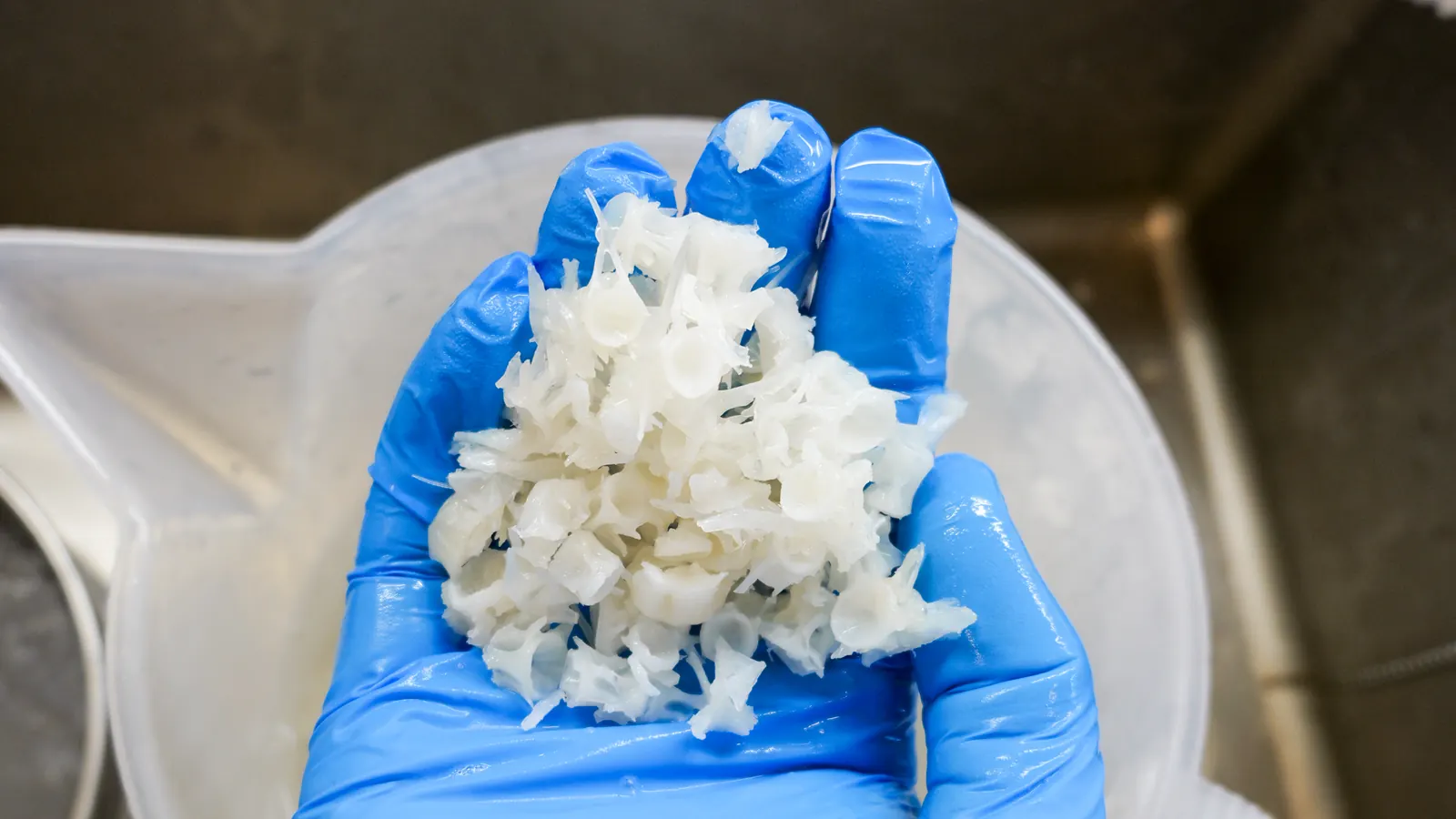
Native, or undenatured, Type II keeps the triple-helix structure of the collagen molecule. It is made at low temperature and used in small, milligram doses, usually in capsules or tablets. Hydrolysed Type II is cut into peptides and used in gram doses, like other collagen peptides. We are developing both from the same cod skeleton.
Claims in the EU and UK
No health claim for collagen itself is authorised in the EU or in Great Britain. Brands that use collagen in joint products usually build on authorised claims for other nutrients in the formula. One example is vitamin C, which contributes to normal collagen formation for the normal function of cartilage. We share our claims research with partners; each brand still needs its own legal review.
Research background
Oral Type II collagen, mostly from chicken, has been studied in joint research. We list this literature as background for our development work. It is not a claim about our ingredient, which has not been tested in people.
- Lim et al. (2019), on the mostly terrestrial sourcing of Type II collagen.
- Lugo et al. (2016), on oral undenatured Type II collagen.
- Martínez-Puig et al. (2023), a review of collagen composition and joint research.
Where we are
Our raw material is the skeleton of wild-caught North Atlantic cod, including the cartilage parts. The Type II content of each batch will be measured by analysis, and the low-temperature process for native Type II is in development. Development samples for partners are planned from Q1 2027.